If you’re looking for the best leveling blocks for RV camping, we’ve reviewed what actually works—whether you’re parking on gravel, soft dirt, or sloped terrain. A good set of blocks makes leveling fast, keeps your rig steady, and helps your fridge, slide-outs, and plumbing work like they should. Pair them with a solid RV stabilizer jack, and you’ll cut down on sway and movement inside. After comparing 12 top-rated options across all types of RVs and surfaces, we’ve narrowed it down to the most durable, easy-to-use, and travel-ready leveling blocks you can count on in 2026.
We’re reader-supported. When you buy through links on our site, we may earn an affiliate commission. As an Amazon Associate, we earn from qualifying purchases, at no extra cost to you.
Best Leveling Blocks for RV: Our Top Picks
- Best Overall: Camco Fasten RV Leveling Blocks
- Best Value Option: ANDERSEN HITCHES 3604-2 2-Pack Camper Leveler
- Most Durable Option: Tri-Lynx 00015 Lynx Levelers
- Best for Dual Axles: RVMATE RV Leveling Blocks
- Best for Precision Leveling: Beech Lane Camper Leveler
- Best for Tight Axles: CARMTEK Camper Leveler Premium Kit
- Most Stable Under Load: Kohree RV Leveling Blocks
- Best All-in-One Kit: RVMATE Camper Levelers
- Best for Large Block Kits: OULEME 12 Pack RV Leveling Blocks
- Best for Traction: OFISPEED RV Leveling Blocks
- Best Lightweight Stackables: Homeon Wheels Camper Leveling Blocks
- Best Compact Kit: LEIDGG 2Packs RV Leveling Blocks
1. Best Overall: Camco Fasten RV Leveling Blocks
Key Details:
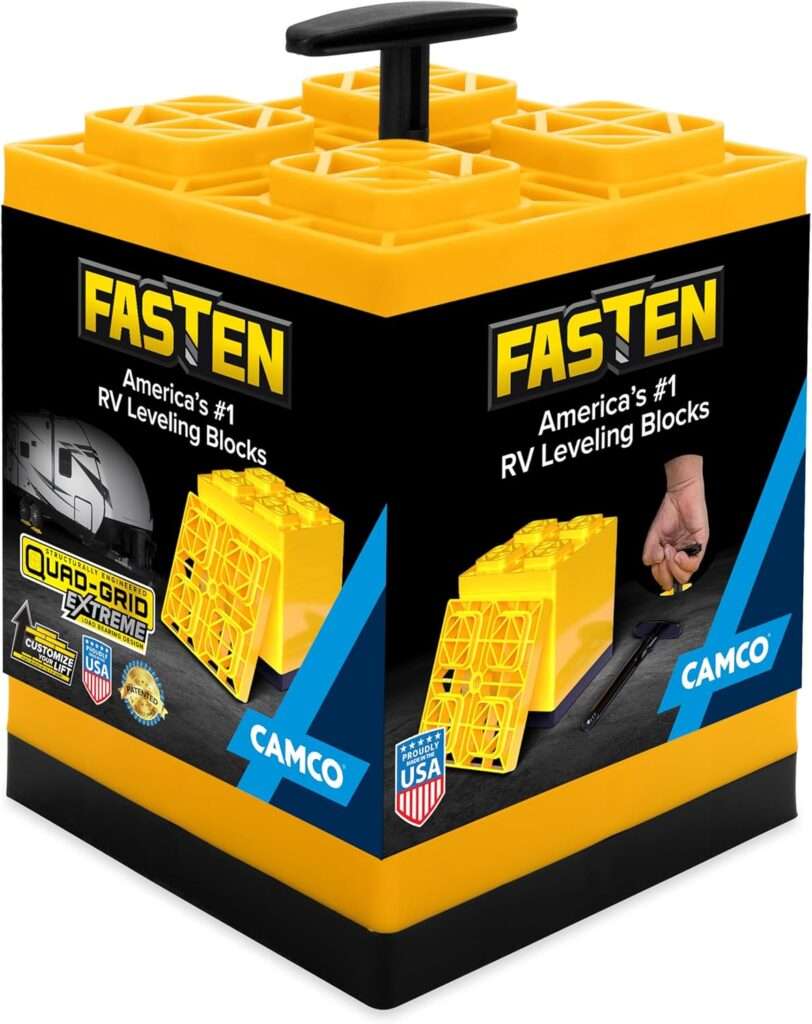
- Type: Stackable interlocking blocks (10-pack)
- Dimensions: 8.5″ x 8.5″ x 1″ per block
- Weight Capacity: Suitable for single/double wheels, stabilizer/tongue jacks, and tandem axles
- Stack Height Recommendation: Up to 4.5 inches
- Special Features: Patented T-handle for carrying and locking; Made in the USA
When it comes to all-around performance and durability, the Camco FasTen Leveling Blocks easily earn the “Best Overall” spot. These bright yellow blocks aren’t just easy to spot at a glance—they’re also incredibly versatile. Whether you’re leveling a fifth-wheel rig or using stabilizer jacks on a smaller camper, the interlocking system lets you customize the height quickly.
After testing these on uneven gravel and grass during a rainy weekend, and the quad-grid surface really stood out for traction and load-bearing. The blocks held firm, didn’t sink or crack, and stayed securely in place even under weight. The integrated T-handle makes a huge difference when you’re packing up—no loose pieces, no separate strap system to fiddle with.
These are especially handy for RVers who camp frequently in varied terrain. Just keep in mind they’re designed to stack to a recommended height of 4.5 inches max—beyond that, you may need a ramp-style solution. Still, if you want a reliable, long-lasting option with wide compatibility, this is our go-to pick for most RV setups.
Pair them with a dependable electric trailer jack for quicker hitching and an adjustable trailer hitch for smoother towing, and you’ll have a complete, hassle-free leveling and towing setup. Whether you’re a weekend warrior or a full-time traveler, these offer the most well-rounded leveling solution for the price. For anyone researching the best leveling blocks for RV, this one checks nearly all the boxes.
Pros:
- Durable polymer blocks won’t crack under load
- T-handle makes setup and teardown simple
- Compatible with a wide range of jacks and axles
- Made in the USA with patented construction
Cons:
- Limited to about 4.5″ height safely
- Slightly bulkier than ramp-style options
2. Best Value Option: ANDERSEN HITCHES 3604-2 2-Pack Camper Leveler
Key Details:
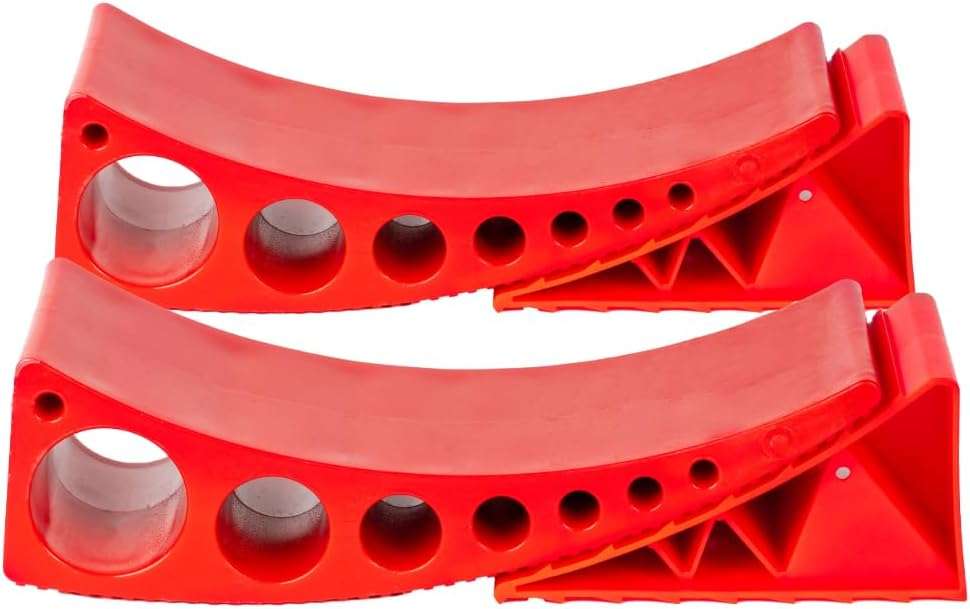
- Type: Ramp-style curved levelers
- Load Capacity: Up to 30,000 lbs
- Max Lift Height: 4 inches
- Dimensions: 15″ x 5.75″ x 3″ per leveler
- Weight: 6.12 lbs total
If you want a fast, stress-free way to level a travel trailer, the Andersen Camper Leveler System is one of the most popular alternatives to traditional RV leveling blocks. Instead of stacking plastic blocks and guessing how many you need, you simply drive up the curved leveler, slide the chock in, and you are locked in. It is a cleaner, quicker setup than wood scraps or the usual block towers, especially when you pull into a campsite late.
In testing, leveling was noticeably faster than standard block kits. On a sloped gravel site, we had the trailer leveled in under five minutes. The textured ramp surface helped prevent tire slip, and the chock fit tightly, which kept the trailer stable once it was positioned. For rigs rated up to 30,000 lb and tires up to 32 inches, it is a solid choice if your main goal is speed and precise leveling without extra steps.
If you tow a dual-axle trailer, there is one practical note. Some setups have tight tire spacing, and you may need to trim a small section of one leveler so it fits between the tires. It is a simple adjustment that many owners do, and it does not change how the system performs once it is in place.
If you are comparing the best leveling blocks for RV based on price-to-performance, Andersen stands out because it saves time, reduces guesswork, and makes quick campsite leveling much easier.
Pros:
- Super fast and easy leveling—under 5 minutes
- Great for single and dual axle trailers
- High capacity for heavy trailers
- Made in the USA with lifetime warranty
Cons:
- May require trimming for some dual axles
- Doesn’t offer as much height customization
3. Most Durable Option: Tri-Lynx 00015 Lynx Levelers
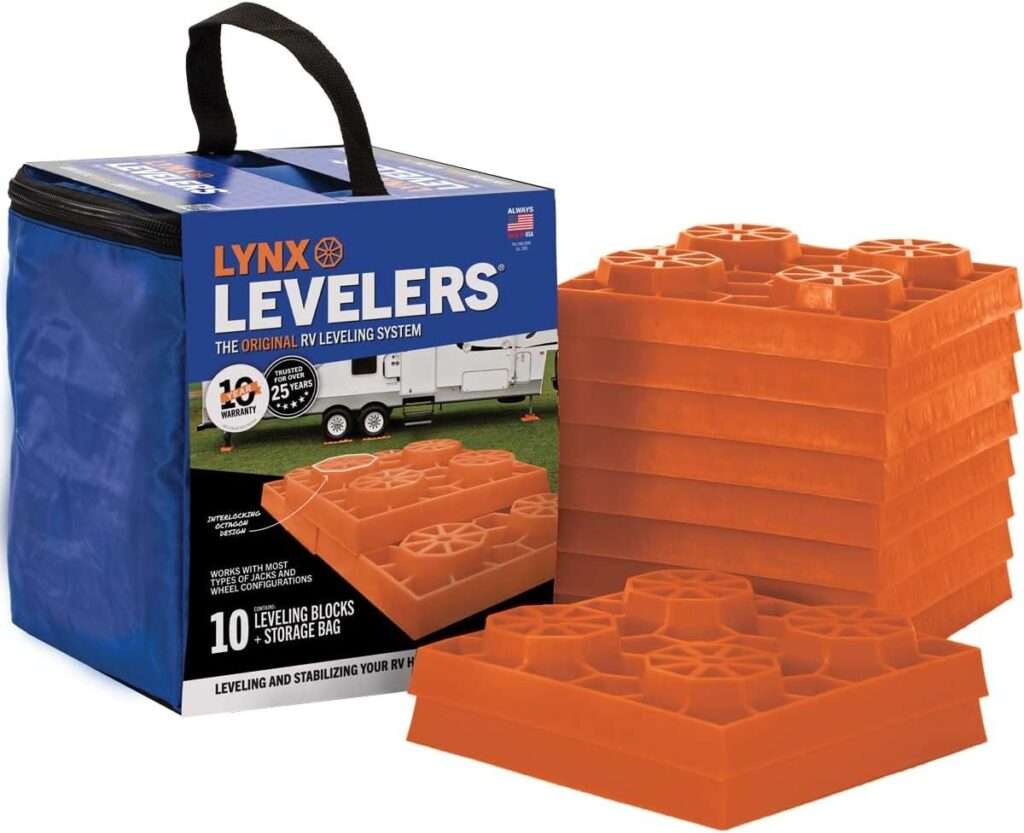
Key Details:
- Type: Stackable leveling blocks
- Dimensions: 8.5″ x 8.5″ per block
- Weight: Just 0.03 lbs each (extremely lightweight)
- Material: High-strength plastic with 10-year warranty
- Includes: 10 blocks and a heavy-duty storage bag
If longevity and proven reliability are high on your list, the Tri-Lynx Lynx Levelers are as solid as they come. These blocks have been in production since 1992, and for good reason—they’re tough, time-tested, and dead simple to use.
After using Lynx blocks over the years, they’ve always held up to rain, heat, and heavy loads without cracking or warping. The bright orange color makes them easy to find even in low light, and the included nylon carry bag is a thoughtful bonus.
The stacking system allows for flexible setups, especially if you’re using them with jacks or stabilizers on uneven terrain. They’re not the most compact blocks when compared to curved levelers, but they make up for it in modularity.
For RVers who want a “set it and forget it” option that’ll last season after season, these are among the best leveling blocks for RV in terms of durability and user trust.
Pros:
- Extremely durable with a 10-year warranty
- Lightweight and easy to carry
- Compatible with most RV types and jacks
- Reliable brand with decades of use
Cons:
- Not ideal for fast leveling—manual stacking required
- Bulkier storage compared to ramp systems
4. Best for Dual Axles: RVMATE RV Leveling Blocks
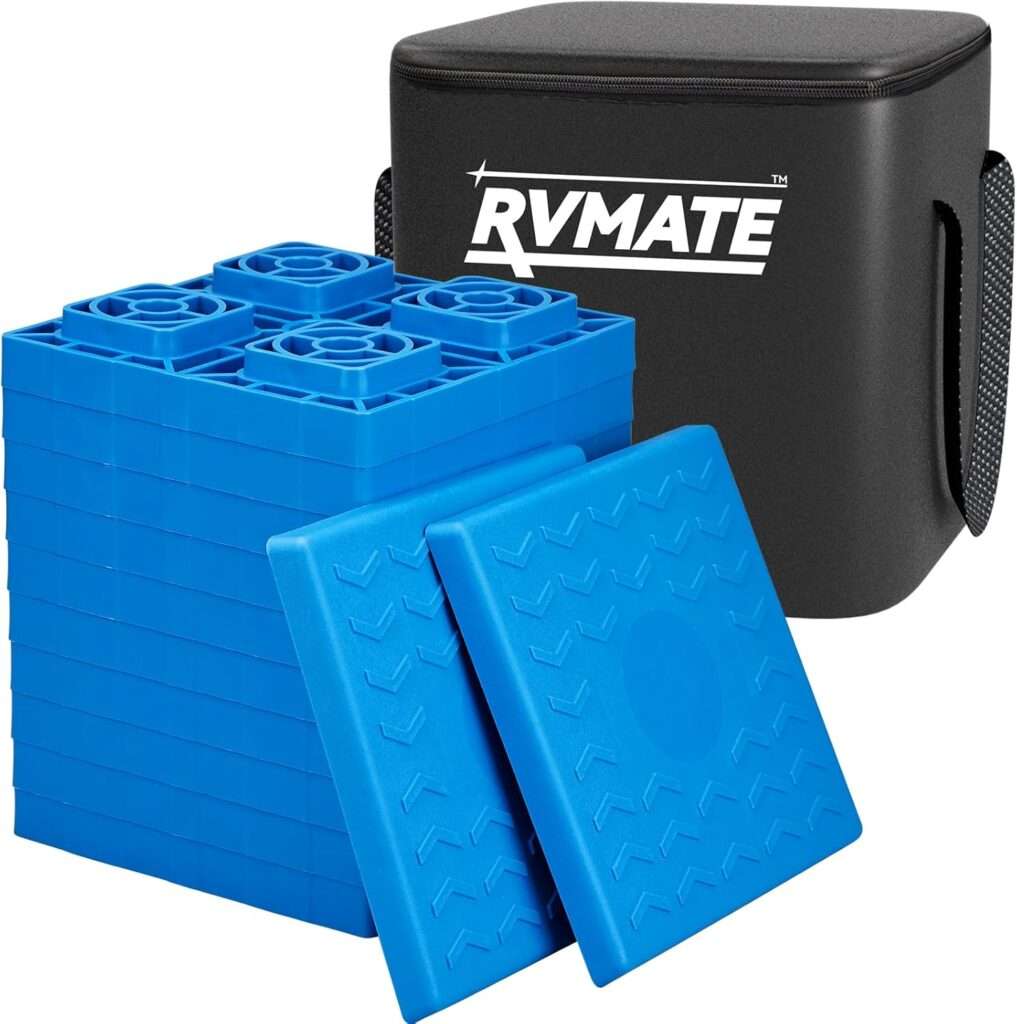
Key Details:
- Type: Stackable interlocking blocks with top caps
- Set Includes: 10 standard + 2 top blocks + storage bag
- Material: High-density reinforced plastic
- Dimensions: 8.5″ x 8.5″ x 1.5″ (standard), 0.75″ (top caps)
- Weight: 10.34 lbs
Designed with dual wheels in mind, the RVMATE Heavy-Duty Leveling Blocks offer a bit more flexibility thanks to their unique combo of stackable base blocks and thinner top pieces. That means you can fine-tune the height better and still maintain surface stability.
After testing these with a 26-foot fifth wheel, the interlocking design felt solid under load, even on loamy soil. The blocks didn’t flex or sink, and the extra height (1.5″ vs. standard 1″) made it easier to reach our needed level with fewer blocks.
The real advantage here is the combo system. Those top caps help prevent wheel dip or rocking, especially with tandem axle trailers. If you’re often parking on slightly sloped surfaces or soft dirt, this block set offers peace of mind and adaptability.
They’re a bit heavier and taller to carry than some kits, but the performance trade-off is worth it. If you’re hunting for best leveling blocks for RV that offer extra lift and dual-wheel support, this one’s a standout.
Pros:
- Taller stack height with fewer blocks needed
- Excellent for tandem and dual axle RVs
- Top caps reduce rocking on uneven terrain
- Sturdy carrying case included
Cons:
- Heavier and bulkier than other 10-pack kits
- Blocks don’t lock quite as tightly as Camco’s
5. Best for Precision Leveling: Beech Lane Camper Leveler
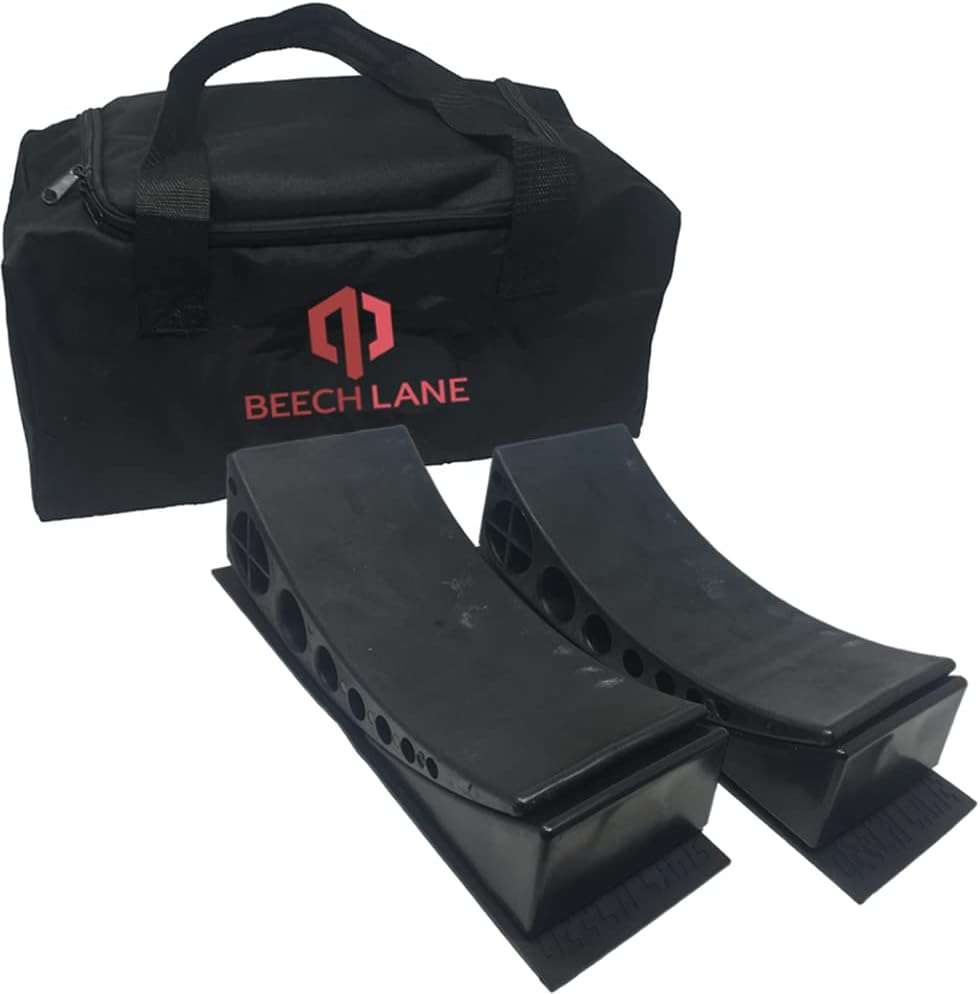
Key Details:
- Type: Curved ramp-style levelers with chocks and mats
- Load Capacity: Up to 35,000 lbs
- Max Lift Height: 4 inches
- Material: High-performance nylon polymer
- Includes: 2 levelers, 2 chocks, 2 grip mats, storage bag
If you’re a stickler for getting your RV perfectly level every time, the Beech Lane Camper Leveler kit is built for you. These ramps offer incremental adjustment from 0.5″ to 4″, which is a game-changer on uneven ground. No more trial and error with stackable blocks.
During testing, we especially appreciated the rubber grip mats. Backing onto the ramps felt secure—even on wet concrete—and once chocked, the rig stayed rock solid. These levelers are also built like tanks. The nylon polymer construction feels tougher than many plastic kits we’ve used over the years.
For dual axle users, note that you may need to trim one of the levelers if your tire gap is tight. It’s not ideal, but Beech Lane actually anticipates this and designs the product to tolerate the cut without performance loss.
If you’ve been frustrated by wobbly setups or uneven doors, this is one of the best leveling blocks for RV owners who want precision without stacking a dozen pieces.
Pros:
- Easy to adjust in fine increments
- Premium grip mats prevent slipping
- Super strong, high-performance construction
- Includes all components in one neat kit
Cons:
- May require cutting to fit some dual axles
- Slightly higher price than basic stackable options
6. Best for Tight Axles: CARMTEK Camper Leveler Premium Kit
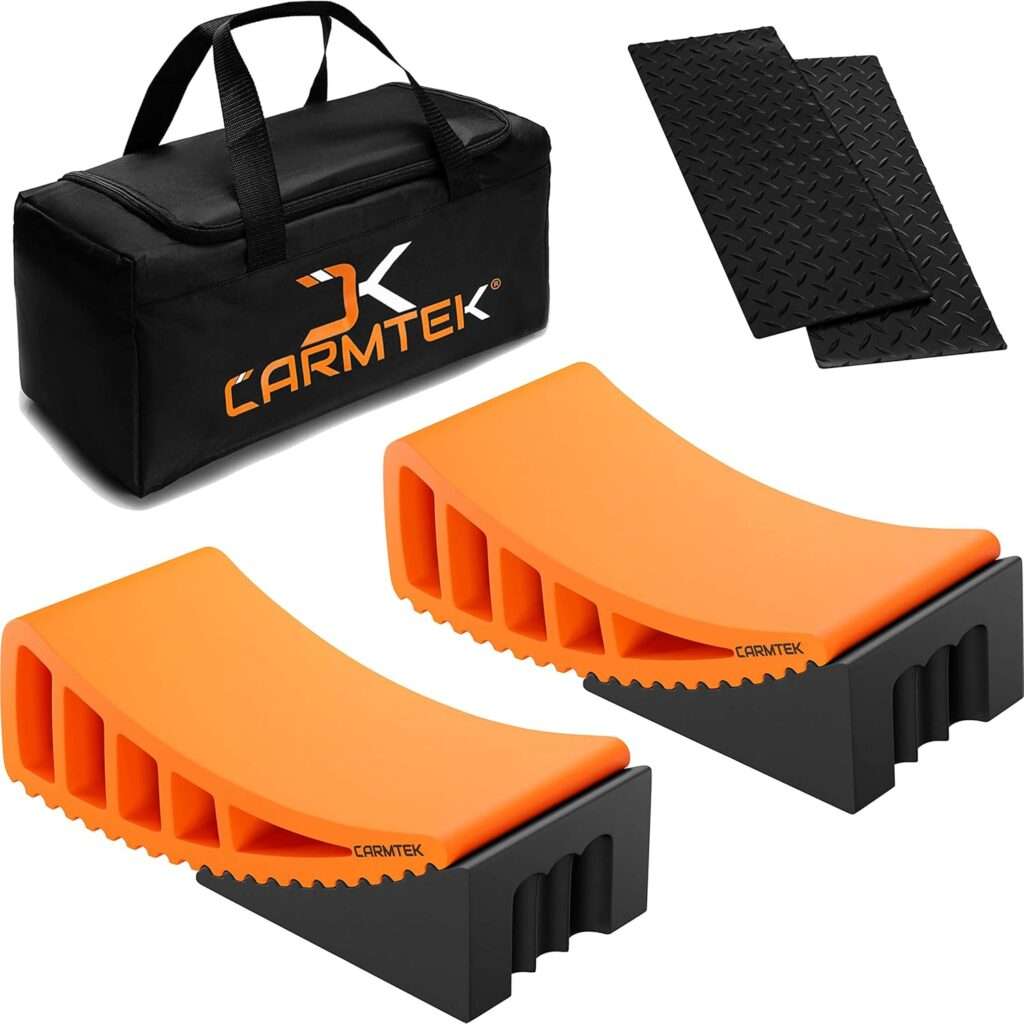
Key Details:
- Type: Compact curved levelers with chocks, mats, and bag
- Load Capacity: Up to 35,000 lbs
- Max Lift Height: 4 inches
- Designed For: Dual axle trailers with less than 3″ between tires
- Special Feature: Patented anti-slip jointing system
Finding levelers that fit tightly spaced dual axles can be tricky, but that’s exactly what the Carmtek Fit Levelers were made for. These ramps are shorter than standard models, letting them slide neatly between tires with just 3″ or less of clearance.
The anti-slip joint system is clever: the leveler base and chock lock together using a channel-and-notch mechanism. When we tested this setup on a sloped lot with loose gravel, it felt extremely secure. The chocks didn’t budge once we locked in.
We also liked how the included mats and carrying bag rounded out the kit—everything you need is there. If you’ve tried other curved levelers and found they just didn’t fit, this could be the game-changer. No trimming required.
If you’re hunting for the best leveling blocks for RV setups with minimal axle spacing, this is the one we’d reach for first.
Pros:
- Fits tight dual axle setups with no modifications
- Anti-slip system improves safety on slick terrain
- Rated for very heavy trailers (up to 35,000 lbs)
- Complete kit—just add your RV
Cons:
- Not ideal for trailers with >3″ between tires
- Slightly heavier than other curved kits
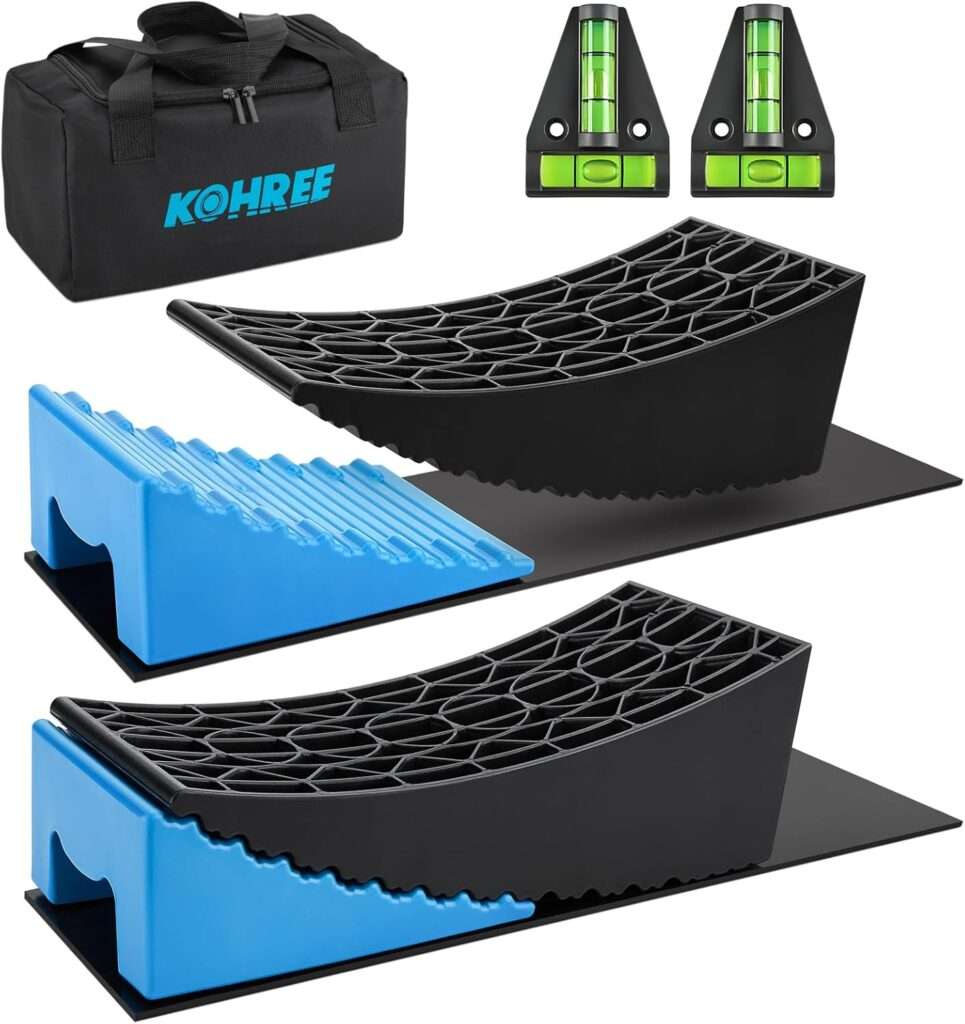
7. Most Stable Under Load: Kohree RV Leveling Blocks
Key Details:
- Type: Curved levelers with chocks, mats, and bag
- Load Capacity: Up to 35,000 lbs
- Max Lift Height: 4 inches
- Construction: Fiber-reinforced nylon polymer
- Includes: 2 curved levelers, 2 blue chocks, 2 mats, 1 carry bag
When it comes to holding steady under serious weight, Kohree’s kit really impressed us. Built from fiber-reinforced nylon, these curved levelers feel more rigid and stable than many similarly priced competitors.
After testing this kit on a Class C RV and were pleasantly surprised by how grippy it felt. The included mats worked perfectly on slick grass, and the gear-like texture between the levelers and chocks locked everything together tightly.
Unlike some curved systems, we didn’t have to cut anything for our dual axle rig—these are designed to work out of the box. They’re also color-coded for easier setup, which is great if you’re working in low light or just getting the hang of leveling your camper.
If you want rock-solid support, especially for heavier travel trailers, these might be among the best leveling blocks for RV owners with weight on their minds.
Pros:
- Fiber-reinforced build feels very durable
- Anti-slip texture plus mats prevent shifting
- Works with dual axle trailers with no trimming
- Supports up to 35,000 lbs
Cons:
- Bulkier carrying case than others
- Color scheme may not match everyone’s setup
8. Best All-in-One Kit: RVMATE Camper Levelers
Key Details:
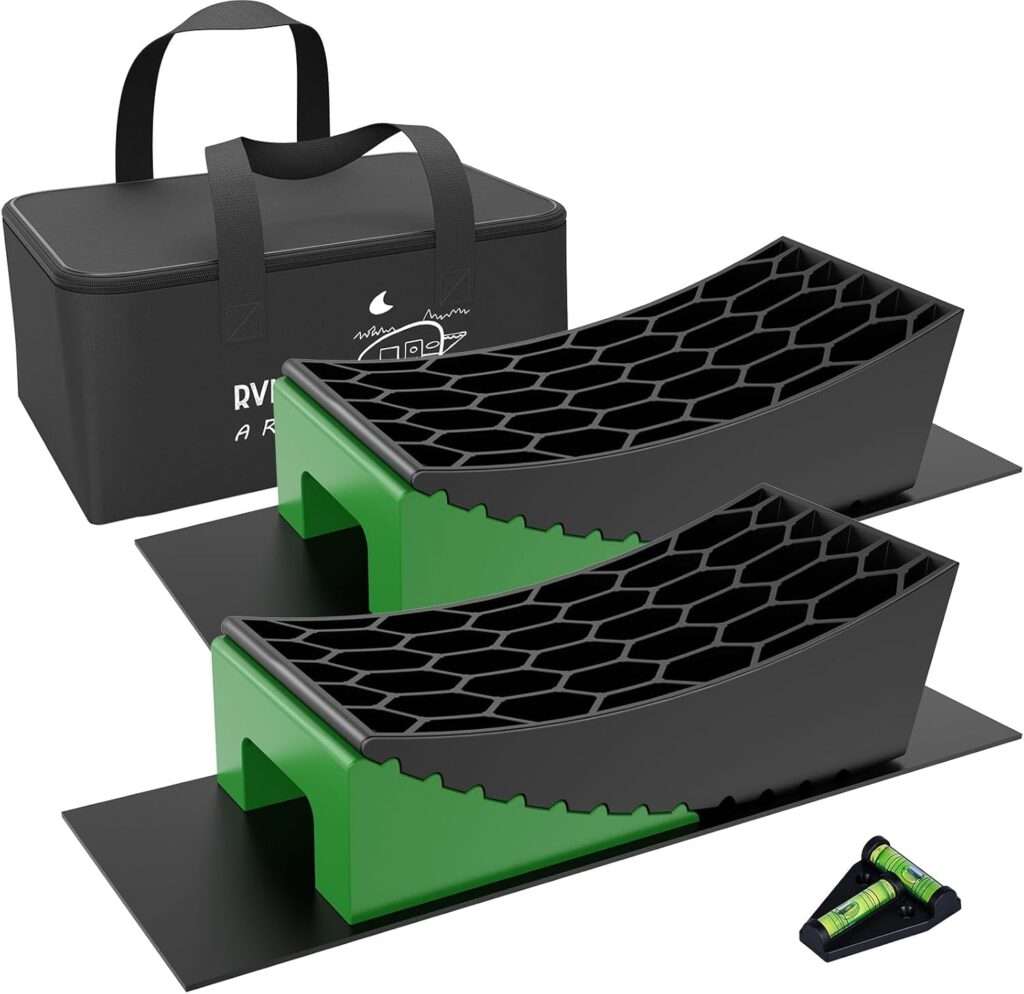
- Type: Curved levelers with chocks and mats
- Load Capacity: Up to 35,000 lbs
- Max Lift Height: 4 inches
- Includes: 2 curved levelers, 2 green chocks, 2 rubber mats, carrying bag
- Material: High-density polyethylene
If you’re looking for a complete out-of-the-box leveling solution, the RVMATE 8-piece kit gives you everything you need. This set includes curved levelers, anti-slip mats, wheel chocks, and a sturdy carry bag—perfect for RVers who want one kit and done.
After using this during a long weekend of touring, where we parked on both concrete pads and loose forest dirt. In both cases, the anti-slip system kept our rig stable and the levelers didn’t deform under pressure. The gear-tooth design between the leveler and chock also adds a nice bit of extra grip.
One standout is that these are pre-sized for dual axles, so there’s no need to trim anything. That’s a huge plus compared to some systems that assume you’ll DIY your own modifications.
Whether you’re a new camper owner or replacing older gear, this RVMATE system gives you one of the best leveling blocks for RV if convenience, compatibility, and price all matter.
Pros:
- Complete kit for immediate use
- Strong anti-slip design at multiple contact points
- Compatible with most RV types and tire sizes
- Supports large rigs (up to 35,000 lbs)
Cons:
- Slight learning curve for first-timers
- Carry bag could be higher quality
9. Best for Large Block Kits: OULEME 12 Pack RV Leveling Blocks
Key Details:
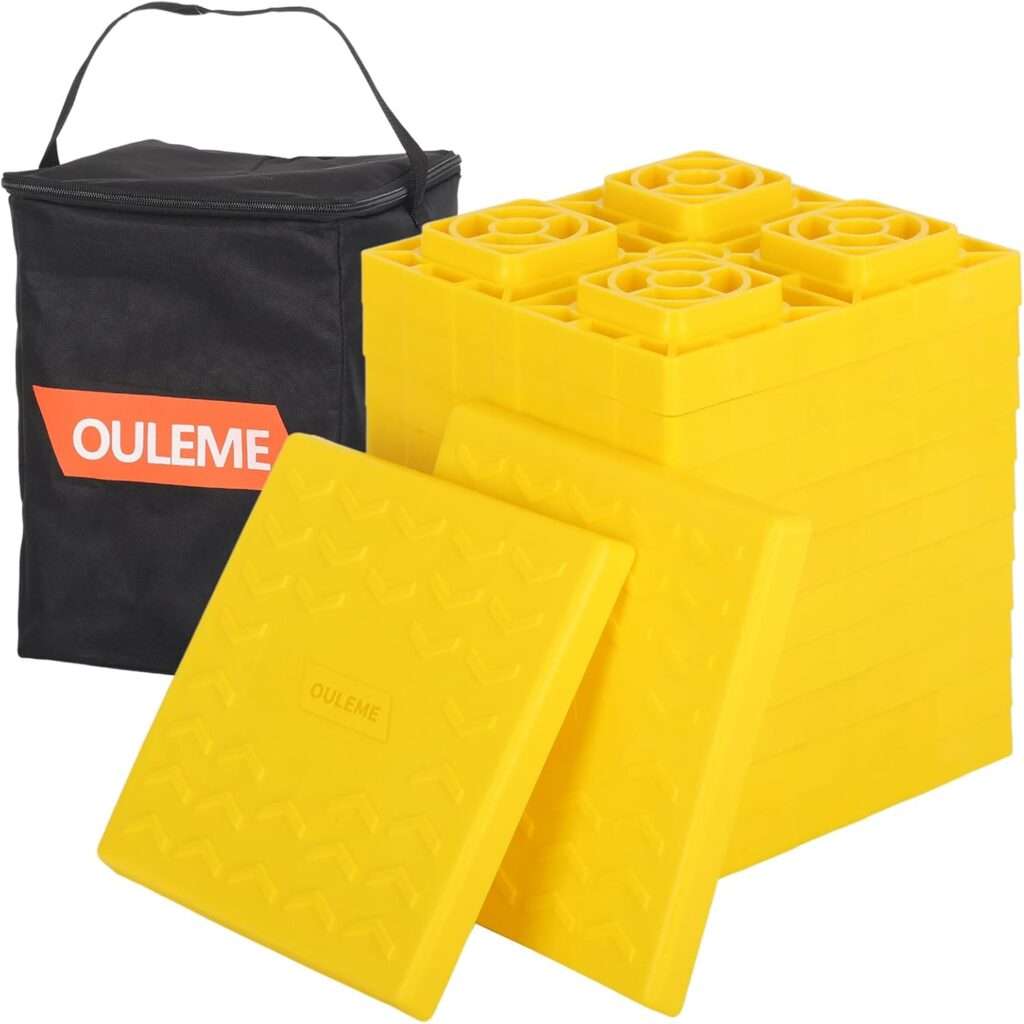
- Type: Stackable interlocking blocks with 2 top caps
- Included Pieces: 10 base blocks + 2 thinner top blocks
- Block Dimensions: 8.5″ x 8.5″ x 1.5″ (base), 0.7″ (top)
- Material: Polypropylene with anti-UV additives
- Weight: 10.23 lbs total
If you want a complete stackable set with plenty of pieces for custom setups, the OULEME 12-Pack is a practical and capable choice. With more blocks than many kits in this price range, it gives you a wide range of height flexibility for everything from tongue jacks to full tire lifts.
Using this kit on soft grass and appreciated how sturdy it felt under weight. The blocks didn’t sink or shift, and the interlocking notches stayed well connected even when stacked high. The inclusion of two thinner top caps helps reduce tire rocking and offers smoother support on uneven terrain.
While it lacks the name-brand prestige of Camco or Tri-Lynx, the performance was on par for most casual RVers. It’s ideal if you’re leveling a motorhome, trailer, or fifth wheel and want to build a taller base with fewer stacks.
If you’re looking for the best leveling blocks for RV owners who want lots of blocks for creative configurations, this is a great pick.
Pros:
- Large 12-piece set gives you more stack height
- Includes top caps to stabilize tires
- UV-treated material resists outdoor wear
- Solid feel under load and won’t crack easily
Cons:
- No carrying handle or strap included
- Doesn’t offer textured grip surface
10. Best for Traction: OFISPEED RV Leveling Blocks
Key Details:
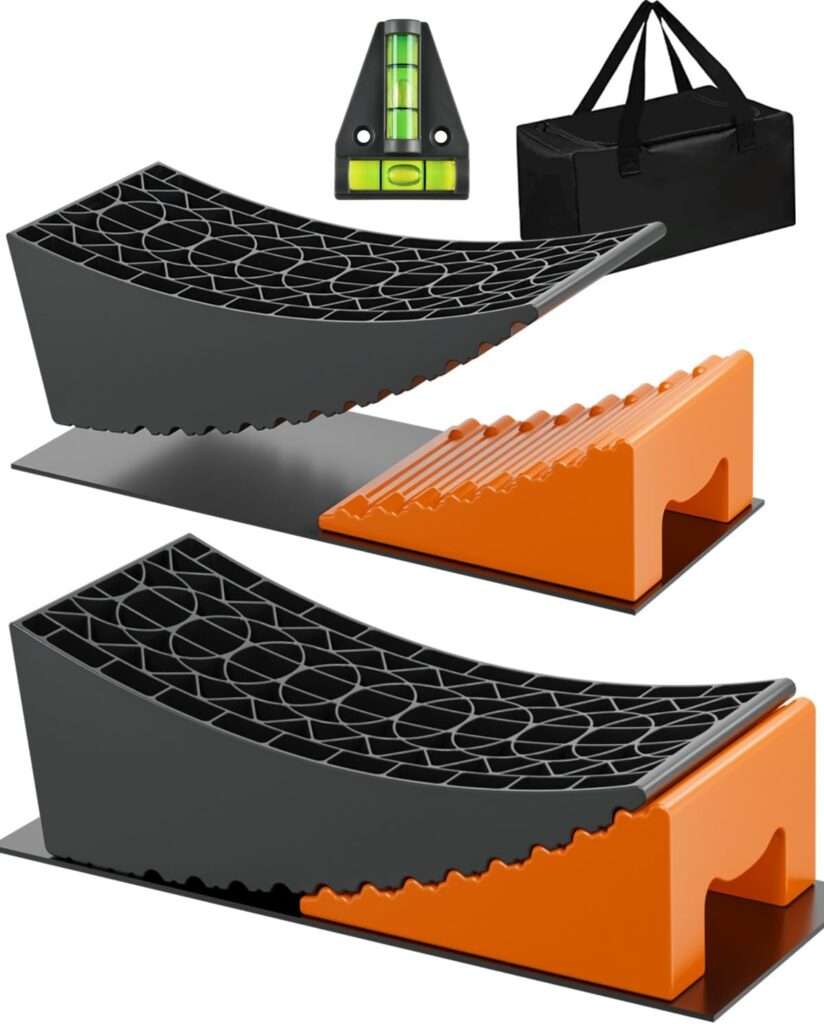
- Type: Curved ramp-style levelers with chocks & mats
- Load Capacity: Up to 35,000 lbs
- Lift Range: 0.5″ to 4″ max
- Dimensions: 12.99″ L x 9.06″ W x 7.09″ H
- Includes: 2 levelers, 2 chocks, 2 anti-slip mats, 1 bubble level, 1 bag
If you’re leveling on slick surfaces like gravel, dirt, or wet concrete, the OFISPEED Camper Leveler Kit shines for its enhanced anti-slip design. It’s one of the most secure-feeling curved kits we’ve tested, with both surface traction grooves and thick rubber mats included.
After putting it through its paces on a gravel pad during a stormy evening, it was quite imimpressivepressing. The gear-like mesh system between the levelers and chocks added excellent grip, and the mats kept the system grounded. The included bubble level was a handy touch for fast adjustments.
Another highlight: it fits dual axle trailers without trimming, unlike some competitors. It also comes in a bright orange finish that’s easy to spot in low light. While not as known as Andersen or Carmtek, it holds its own in every meaningful category.
For RVers who prioritize stability and traction, this is easily one of the best leveling blocks for RV use on slippery or uneven ground.
Pros:
- Double-layer anti-slip system (top + bottom)
- Easy leveling without trimming for dual axles
- Includes bubble level and full storage kit
- High weight capacity for heavy rigs
Cons:
- Not from a widely known brand
- Slightly larger footprint in storage
11. Best Lightweight Stackables: Homeon Wheels Camper Leveling Blocks
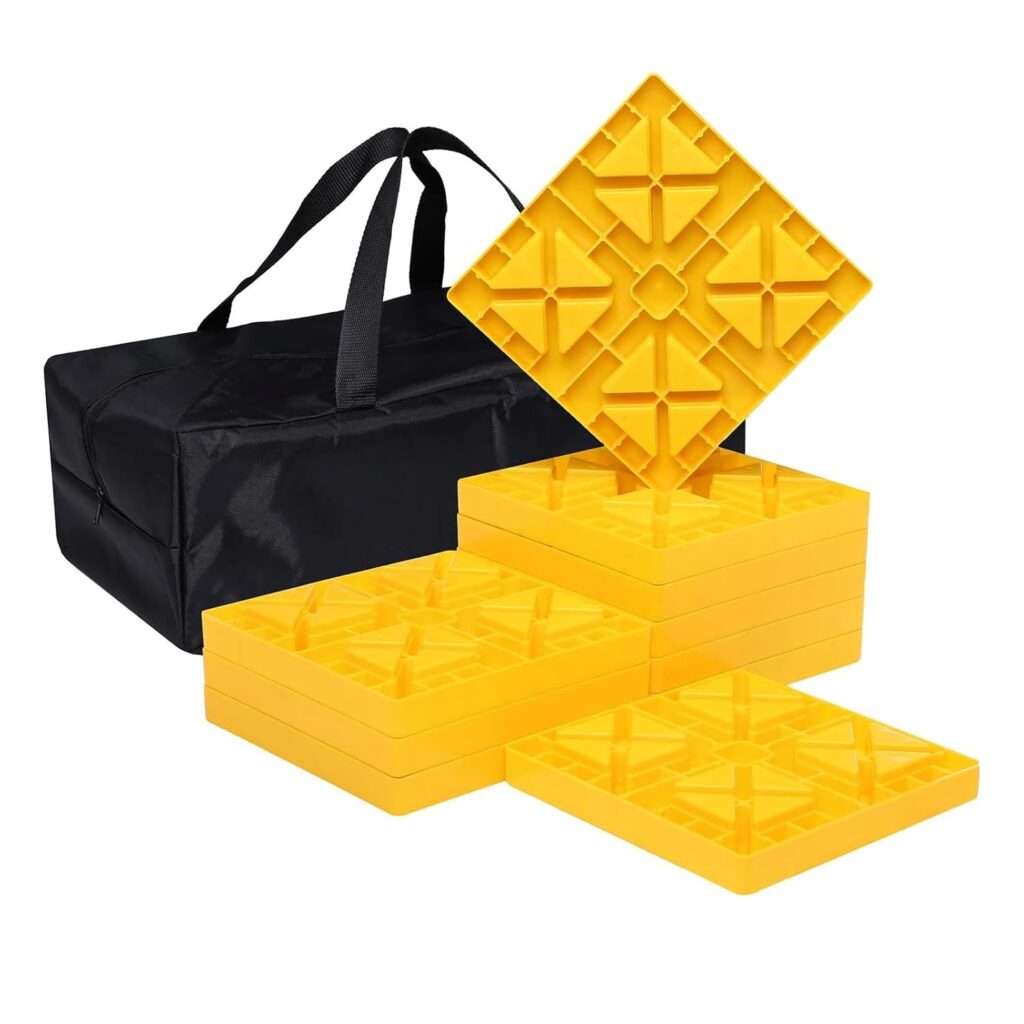
Key Details:
- Type: Stackable leveling blocks
- Dimensions: 8.5″ x 8.5″ x 1.3″ per block
- Weight: 6.97 lbs total
- Material: High-strength plastic with non-slip base pads
- Includes: 10 blocks + zippered carry bag
For campers who want a lightweight, easy-to-manage leveling option, the Homeon Wheels 10-Pack strikes a great balance between portability and function. These blocks are light but solid, and they include anti-slip pads underneath for added grip on soft or sloped surfaces.
When tested under a smaller travel trailer we found them ideal for tongue jacks and quick tire adjustments. The zippered carry bag keeps things neat, and the bright yellow color helps with visibility at night or when packing up in a rush.
While not built for the heaviest Class A rigs, this set is more than capable for most mid-size trailers and motorhomes. It’s especially useful if you’re looking to shed some gear weight or have limited basement storage.
Among the best leveling blocks for RV owners with compact storage needs, this one earns a spot for its ease of use and featherlight handling.
Pros:
- Super light and easy to handle
- Great for smaller RVs and trailer jacks
- Non-slip pads improve safety
- Zippered bag keeps storage tidy
Cons:
- Not ideal for very large/heavy RVs
- No textured grip on the block surface
12. Best Compact Kit: LEIDGG 2Packs RV Leveling Blocks
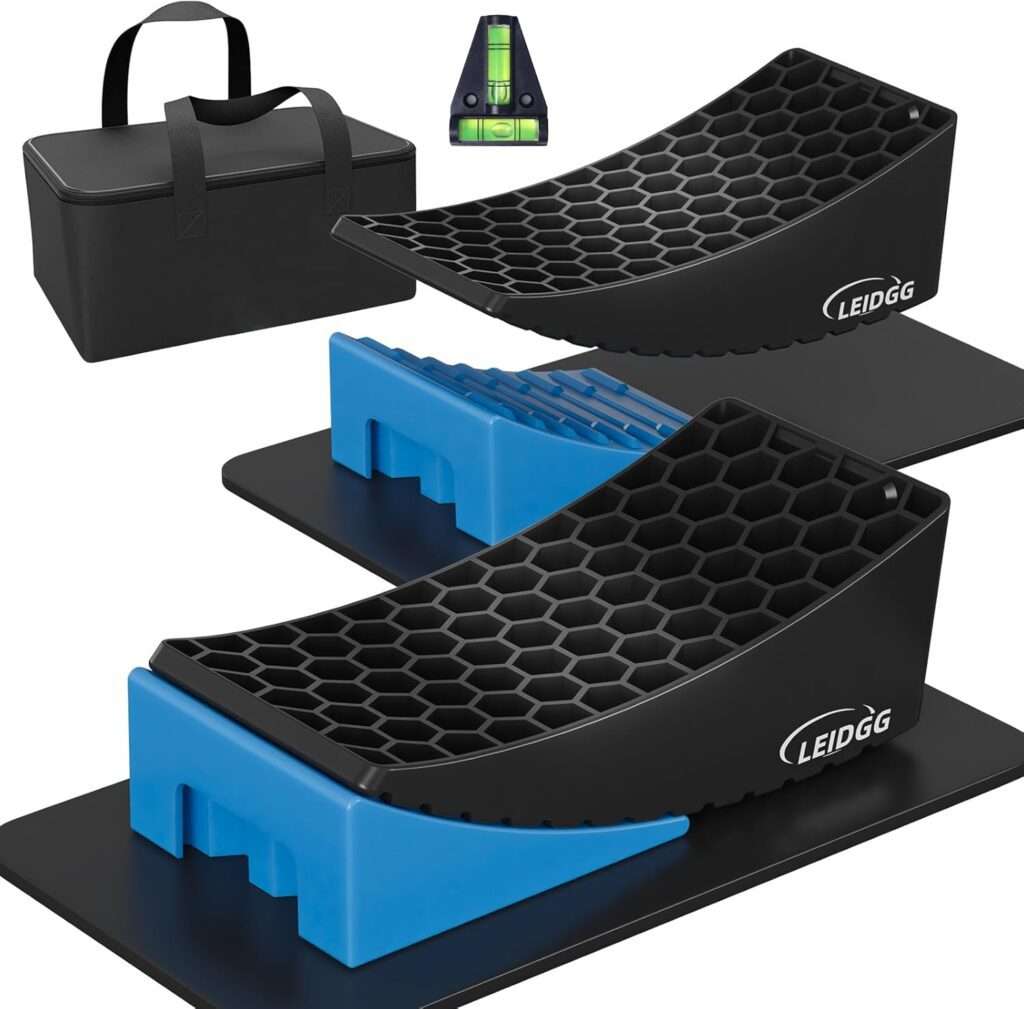
Key Details:
- Type: Curved levelers with chocks and anti-slip mats
- Load Capacity: Up to 35,000 lbs
- Lift Range: 0.5″ to 4″
- Material: Solid PP polymer
- Kit Includes: 2 curved levelers, 2 chocks, 2 mats, 1 T-bubble level, carry bag
The LEIDGG Leveler Kit is a compact, no-frills option that still delivers everything you need in one portable bundle. It includes curved ramps, matching chocks, rubber mats, a level, and a tough little carry bag—perfect for first-time RVers or minimalist setups.
Testing it with a 28-foot trailer on uneven pavement we found the leveling process quick and drama-free. The gear teeth between the leveler and chock locked nicely, and the non-slip mats helped keep everything grounded even without wheel chocks in place.
This kit may not have the rugged feel of a Carmtek or Beech Lane, but it works reliably for most campers—and you won’t need to modify anything for dual axle rigs. That’s a huge plus for hassle-free setup.
If you’re looking for the best leveling blocks for RV owners who want a clean, all-in-one kit that’s easy to carry and store, this one’s a winner.
Pros:
- Simple and complete leveling solution
- Triple anti-slip system improves ground grip
- Fits dual axles out of the box
- Lightweight and compact kit for smaller rigs
Cons:
- Chocks are thinner than premium models
- Shorter 3-month warranty
Why RV Leveling Blocks Matter
RV leveling blocks help keep your camper level, comfortable, and properly supported on uneven campsites. Whether you’re parking on gravel, dirt, or sloped pavement, they raise the lower wheels to correct side-to-side tilt and improve your camping setup.
Proper leveling also helps certain RV appliances work correctly. While leveling blocks adjust your RV’s height, stabilizer jacks reduce movement once your camper is level.
Here’s why proper RV leveling matters:
- Appliance performance: Absorption refrigerators need a reasonably level position for proper cooling. If you’re comparing different fridges for van life, remember that compressor models generally tolerate uneven parking better.
- Comfort: A level RV makes sleeping, cooking, and walking inside more comfortable.
- Water drainage: Proper leveling helps sinks, showers, and plumbing drain as intended.
- Slide-out operation: Keeping your RV within its recommended leveling limits supports proper slide-out operation.
- Campsite setup: Leveling blocks make it easier to adjust your RV on uneven parking surfaces.
Types of RV Leveling Blocks Explained
RV leveling blocks come in different designs, but stackable blocks and curved ramps are the two main options for leveling wheels. Your choice depends on your RV’s weight, tire configuration, and campsite conditions.
Here are the main RV leveling options to consider:
- Stackable interlocking blocks: These blocks connect to create adjustable tire platforms. They’re versatile for travel trailers, motorhomes, and uneven campsites.
- Curved ramp-style levelers: These allow precise height adjustments as you drive onto the ramp. Most offer approximately 0.5 to 4 inches of lift.
- Jack pads and support blocks: These provide a wider support surface beneath compatible tongue jacks, landing gear, and leveling jacks.
- Leveling kits with chocks and mats: These combine curved levelers with wheel chocks and anti-slip mats for easier setup and improved grip.
For frequent travelers, curved levelers offer convenience. Stackable RV leveling blocks provide more flexibility for different ground conditions and support configurations.
How to Choose the Best RV Leveling Blocks
Choosing the best RV leveling blocks depends on more than just price or brand. You’ll want a system that supports your camper’s weight, fits your tires, and provides enough height adjustment for uneven campsites.
Here are the key features worth comparing:
RV Weight Capacity and Tire Compatibility
Weight capacity is one of the most important factors when buying RV leveling blocks. Check the manufacturer’s load rating and whether it applies per block, per wheel, or to the entire system.
Heavy motorhomes and fifth wheels may require reinforced leveling blocks with higher weight ratings. Also, make sure the platform properly supports your RV tires, especially with wide tires or dual-wheel configurations.
Leveling Height and Adjustment Range
Different campsites require different amounts of lift. Stackable blocks typically add height in roughly one-inch steps, while curved RV levelers offer more precise adjustments.
For example, the Andersen Camper Leveler provides approximately 0.5 to 4 inches of adjustment. The Camco FasTen system recommends a maximum stack height of 4.5 inches.
Choose a leveling range that matches the slopes you typically encounter without exceeding the manufacturer’s limits.
Single Axle vs Dual Axle Compatibility
Not every camper leveling system fits tightly spaced tandem axles. Standard curved ramps may require trimming where the tire gap is narrow.
Compact systems like the Carmtek Fit Levelers are designed for dual axle trailers with less than 3 inches between tires. Stackable blocks offer another option, provided you have enough pieces to support the required wheels.
Ground Traction and Stability
Leveling on gravel, wet grass, or soft dirt requires additional care. Look for interlocking surfaces, non-slip rubber mats, or curved levelers with secure chock connections.
On soft ground, use a suitable load-rated base to distribute weight and reduce sinking. Anti-slip mats improve traction but cannot replace firm ground support.
Durability, Material, and Storage
Quality RV leveling blocks commonly use reinforced polymers, high-density plastics, or UV-resistant polypropylene. Look for strong construction, weather resistance, and a design that resists deformation under its rated load.
If storage space is limited, compact curved levelers or stackable blocks with carrying handles are easier to organize. A dedicated storage bag also helps keep muddy equipment away from your other camping gear.
Common RV Problems Caused by Poor Leveling
An improperly leveled RV can affect daily comfort and the operation of certain onboard systems. The problems vary depending on your camper’s design and how far it sits off-level.
Common issues include:
- Reduced cooling performance in absorption refrigerators, especially during extended parking
- Uneven shower drainage or water collecting in low areas
- Slide-out operation problems when outside manufacturer leveling limits
- Uncomfortable sleeping surfaces and tilted interior floors
- Excessive jack extension or uneven support during campsite setup
- Increased rocking when the RV is not properly stabilized
Using correctly rated leveling blocks helps create a more balanced setup. Once your camper is level, RV stabilizer jacks can further reduce unwanted movement inside.
How to Safely Use RV Leveling Blocks
Properly positioning RV leveling blocks helps prevent slipping, cracking, and unstable parking. Always follow your RV and leveling equipment manufacturers’ instructions, especially when dealing with heavy trailers or automatic leveling systems.
Here are some practical safety tips:
- Choose firm ground: Park on the flattest available surface and avoid unstable soil.
- Check your RV’s level: Use a bubble level or leveling app to identify the required adjustment.
- Level side-to-side first: For conventional travel trailers, adjust wheel height before leveling front-to-back with the tongue jack.
- Support your tires properly: Position blocks so the tire tread is adequately supported without overhanging the platform.
- Secure the wheels: Use appropriate wheel chocks after positioning your RV and before unhitching a trailer.
- Follow stacking limits: Never exceed the manufacturer’s recommended height or weight capacity.
- Use stabilizers correctly: Lower stabilizer jacks only after leveling. Never use ordinary stabilizer jacks to lift your RV.
- Inspect before every trip: Replace cracked, damaged, or severely worn leveling blocks.
For curved leveling ramps, drive onto the leveler slowly, stop at the required height, and secure the matching chock. Recheck your RV’s position before extending slide-outs or settling in.
If you use an electric trailer dolly to maneuver your travel trailer into a campsite, finish positioning the trailer before setting up the leveling blocks and wheel chocks.
Final Words
Leveling blocks keep your RV safe, stable, and comfortable, especially when you’re camping on uneven ground. Whether you’re setting up on concrete, gravel, dirt, or grass, the right set of blocks can make a huge difference in your experience.
If you want a versatile, all-around reliable option, the Camco Fasten RV Leveling Blocks are hard to beat. They’re modular, durable, and compatible with nearly every rig setup. On the other hand, if speed and simplicity are your priority, the ANDERSEN HITCHES 3604-2 2-Pack Camper Leveler is an excellent choice for quick, precise leveling in just minutes.
From stackable block sets to curved ramp-style systems, each product we reviewed solves a specific problem. Use this guide to match the best RV leveling blocks to your rig’s size, axle configuration, and the terrain where you usually park. With the right setup, you’ll enjoy faster arrivals, safer campsites, and a much more comfortable stay, no matter where the road takes you.
Related FAQs
What are RV leveling blocks used for?
RV leveling blocks help raise one side or corner of your RV to make it sit level on uneven ground. This improves appliance performance, water drainage, and overall comfort inside your camper.
Do I need leveling blocks if my RV has automatic leveling?
Yes, in many cases. Even with auto-leveling systems, blocks can reduce strain on your jacks, prevent overextension, and give better support on soft ground like grass or dirt.
Can I use wood instead of RV leveling blocks?
Technically, yes—but it’s not recommended. Wood can rot, splinter, or crack under load. Purpose-built leveling blocks are stronger, lighter, and designed to lock together for added stability.
How many leveling blocks do I need for my RV?
It depends on your setup, but most RVers start with at least 10 stackable blocks or 2 curved levelers with chocks. Dual axle rigs may need more blocks or a combination of styles.
What’s the difference between leveling blocks and wheel chocks?
Leveling blocks raise the RV to make it level. Wheel chocks keep the RV from rolling. You should use both together for safe, secure setup—especially on sloped or unstable ground.
Can RV leveling blocks be used on soft or muddy ground?
Yes, but you’ll need extra support. On soft or muddy surfaces, place a wide board or rubber mat under the blocks to prevent sinking. Some kits include anti-slip mats for this reason—they improve grip and stability when camping on grass, sand, or wet soil.
Do leveling blocks work for dual axle trailers?
Absolutely. Many RV leveling blocks are designed to fit dual axle setups. Ramp-style levelers like Andersen or Carmtek can be used between tightly spaced tires, while stackable block systems can be arranged to support both axles evenly. Just check that your kit specifies compatibility with dual wheel spacing before buying.

Jack Rivers is a long-time RVer, a husband, and a dad who’s traveled solo and now with his family. He’s learned a lot from years on the road, sometimes the hard way. From quiet mornings parked by the woods to messy evenings with the kids and a busted heater, he’s been through it all. Miles writes to share the real stuff, the small wins, and the lessons that make RV life worth it, no matter who you’re traveling with.